To translate JSON files, import your source-language JSON file into a POEditor project, translate the strings with any of the available options, then export each language as a localized JSON file. Here's how to set it up.
1. Create a localization project
Log in to your POEditor account, create a new translation project and add your software's default language to it.
2. Import the source language from your JSON file
In the project page, click on Import to upload the keys from your key-value JSON file as terms. Both flat and nested key-value JSON files are supported. Choose Also import translations to a language and select the language you added in step 1, so your source texts are imported too.
POEditor also supports i18next JSON and other JSON formats, with plural forms in all of them.
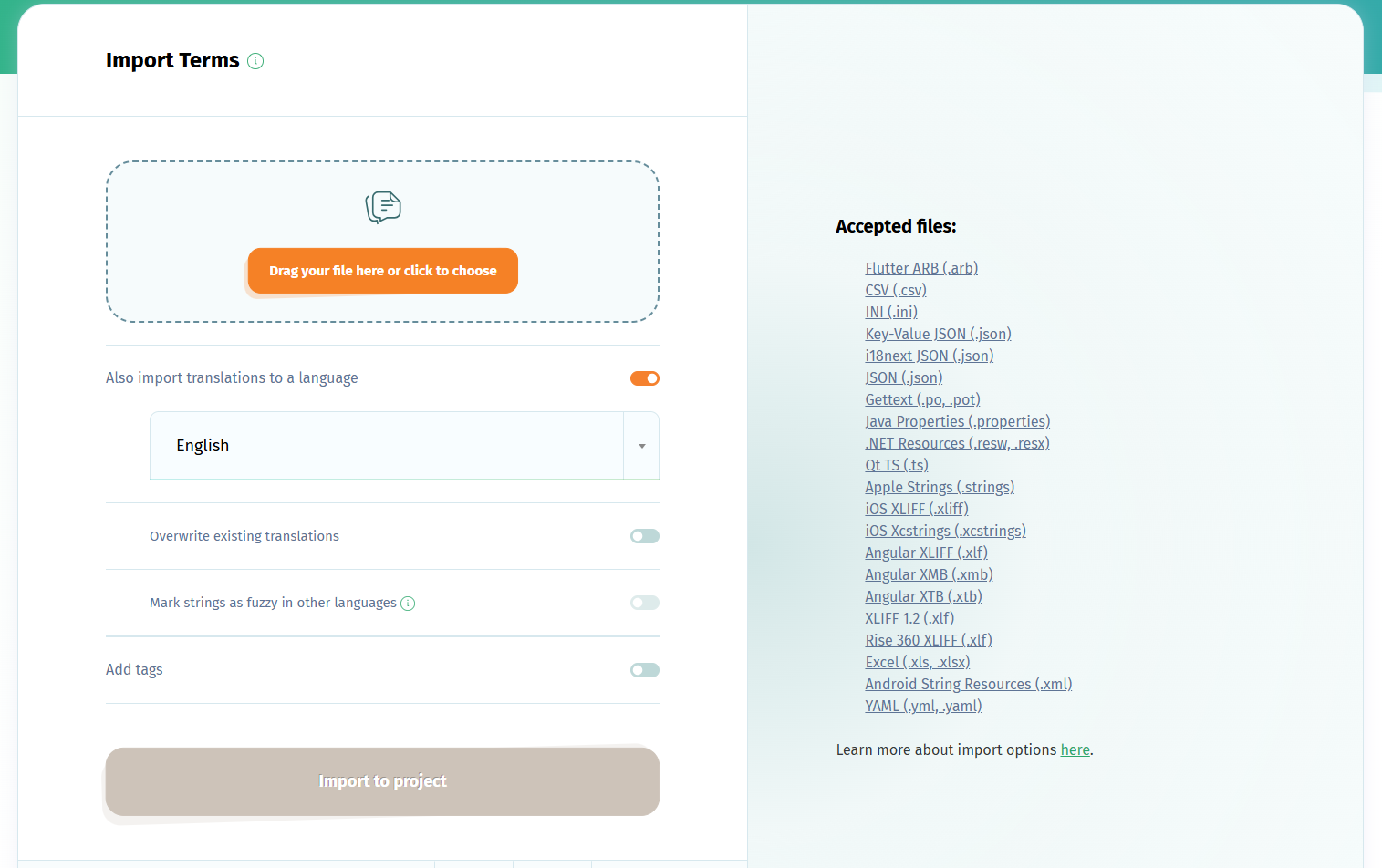
This language will automatically be suggested as your project's Default Reference Language after you import the translations. You can change the DRL in the project's settings.
3. Translate your JSON strings
Add the languages you want, then choose how to translate them:
- AI translation with your own OpenAI, Claude, Gemini, Azure AI or Amazon Bedrock account. You can customize the prompt to match your tone.
- Machine translation with Google Translate, DeepL or Azure AI Translator.
- Your own translators, invited as contributors to specific languages.
- Human translations, ordered from the available LSPs.
Translation memory (available from the Start plan) suggests earlier translations of similar strings, and QA checks and QE feature catch issues before export.
4. Export localized JSON files
When you are done, click Export in any translation page to download that language as a JSON file, or use one of the other export options.
If you want to automate the import/export, use the POEditor API, one of the integrations with code hosting platforms or Workflows.
Only need to edit a JSON file, not translate it? See the JSON Editor. Building with React or Vue? See the guides for React apps and Vue apps.